Typology Skincare Review: What a Paris Resident Actually Uses (and Has for 4 Years)
I placed my first Typology order in 2022. I’ve placed thirteen more since. That’s the review in one sentence — but the how and why are worth knowing, especially if you have sensitive, dry, or hormonally reactive skin and you’re trying to figure out whether a French skincare brand you can’t test in a store is actually worth ordering online.
Typology is a French skincare brand founded in 2019 by Ning Li, built around minimal ingredient lists, vegan formulations, and a diagnostic questionnaire that builds a complete routine based on your skin type and concerns. Li later founded Sujet, a French fragrance house — the same philosophy of ingredient intentionality, applied to perfume.
If you want the broader picture of what’s worth buying at a French pharmacy, the French pharmacy skincare guide covers the full category — this post is specifically about Typology, from four years of using it.

This post contains affiliate links. If you purchase through them, I may earn a small commission at no extra cost to you. Merci for your support!
Why I Switched to Typology
My second son was born around Thanksgiving — the point in Paris when the air cools, the heating comes on, and skin that was managing fine suddenly isn’t. The hormonal shift after delivery made things worse: dryness, peeling, that tight feeling where nothing quite soothes. I needed something that actually worked, not something I’d been using out of habit.
I’d heard about Typology at the time. They were already doing something different in France: vegan, natural skincare with genuinely minimal branding, before minimalism became the obvious move for every new brand. What distinguished them from other clean beauty options was the diagnostic — an online questionnaire that assesses your skin type and specific concerns and then builds a complete routine around your answers, with the products listed in the correct application order. I filled it in and ordered the full recommended routine in 2022. Six products, €150.
The results were immediate enough that I noticed within the first week. The double cleanse was gentler than anything I’d been using. The serum and cream combination addressed the dryness without the heaviness I’d been tolerating elsewhere. My skin changed in texture before it changed in appearance. I’ve been ordering ever since.
My Full Typology Routine (Morning and Evening)
Morning Typology Skincare Routine

Bi-Phase Repairing Serum C30 — NMF Complex 3% + Squalane. The first step of my morning routine. Formulated for dry, sensitive, atopic skin prone to rosacea. I have psoriasis-prone skin as well as general sensitivity, and this serum is the piece of the routine I’ve replaced least frequently — it’s been in every order for the past two years.
Eye Cream for Fine Lines and Wrinkles A41 — Q10 1% + Prickly Pear Oil. Eye cream for fine lines and the under-eye area. Added this in 2024 and it’s now a consistent part of the morning sequence.
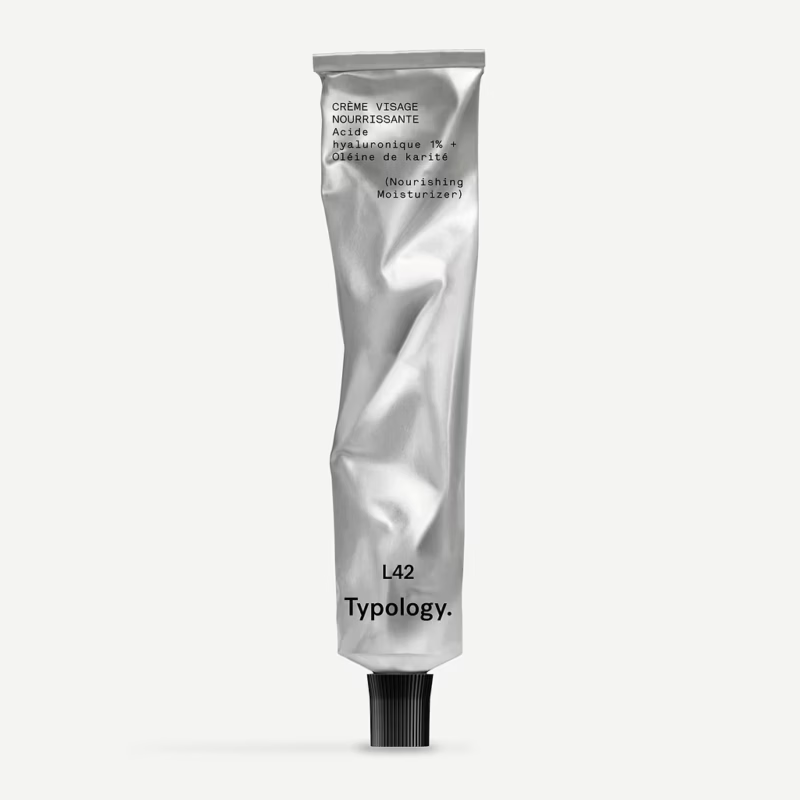
Nourishing Moisturizer L42 — Hyaluronic Acid 1% + Shea Oleine. The face cream that’s been in every order since December 2022. It protects against dryness without feeling heavy, which is harder to find than it sounds.


Evening Typology Skincare Routine
The evening routine starts with a double cleanse — the method that changed my skin most noticeably when I switched to Typology.
7-Ingredient Cleansing Oil D12 — Oil cleanser, first step. Seven ingredients, 99% natural origin, fragrance-free, tested under dermatological control. Over 1,500 reviews on the Typology site. This is a product I’d recommend to almost anyone regardless of skin type — it removes makeup and sunscreen without stripping.
Hydrating Cleansing Milk L14 — Hyaluronic Acid 0.5% + Chamomile Extrac Hydrating milk cleanser, second step. Gentle enough to use nightly without the dryness that most second cleansers cause.
After cleansing: Nourishing Serum L34, then the same Nourishing Moisturizer L42 from the morning routine.
For psoriasis-prone skin specifically: I use the Dry Patch Relief Cream C92 — Phytosterols 1% + Allantoin. This is a cream formulated specifically for psoriasis-prone skin. It’s the most targeted product in my lineup and the one I haven’t found a comparable alternative to elsewhere.


The Tinted Products: Sérum Teinté and Anti-Cernes
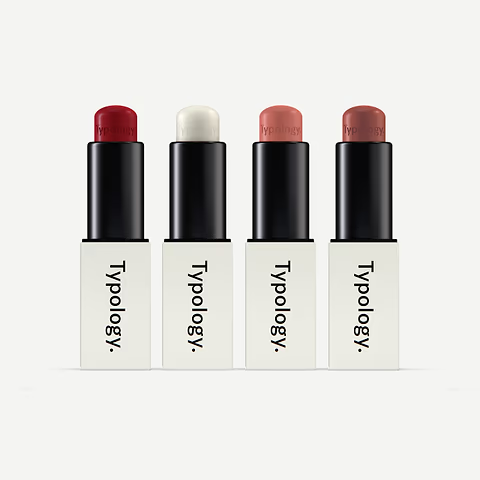
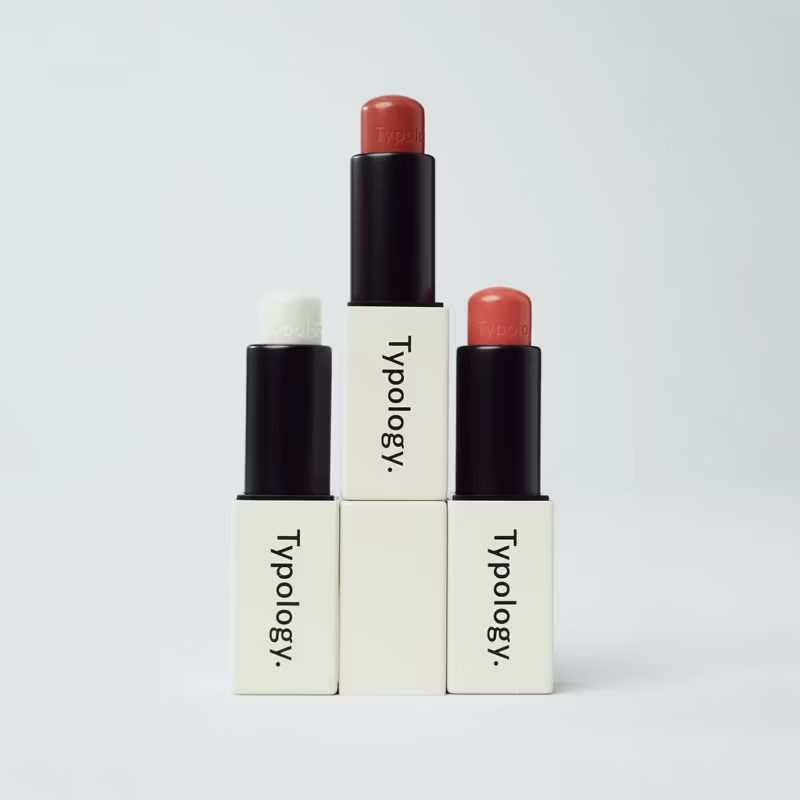
Typology’s tinted range is worth knowing about separately, because it’s one of the cleaner tinted product options I’ve found at this price point.
Glow Drops T31 — Vitamin C + Aloe Vera. Light coverage, natural finish, non-comedogenic, no silicones, 99% natural origin. Over 9,000 reviews on the site. I use Type 1 (Très clair — very fair, for pale skin with or without freckles). This is my everyday base when I want something minimal that still evens out the skin tone or used as a highlighter.
Tinted Concealer T20 — Caffeine 2% + Cornflower Hydrosol, €25.50. Tinted concealer. I use Type 1 as well — it’s right for most of the year, though it may run slightly light in summer. I haven’t yet tested the Type 2 shade for comparison.
Shade guidance for international readers: Typology numbers shades by depth, Type 1 being the fairest. Each shade description includes skin tone guidance (undertone, freckles, general complexion range). If you’re between shades, the descriptions will tell you which way to go. If you’re ordering without being able to test, starting with the lighter shade is the safer direction — you can always layer.


The Pregnancy Product
During my third pregnancy I tested the Stretch Marks Gel-Oil P92 — Baobab Oil. A stretch mark gel-oil. The reason I tried it was simple: I’m extremely sensitive to scent during pregnancy and this product is completely fragrance-free. I never developed stretch marks during any of my pregnancies so I can’t speak to efficacy for that purpose — only to the experience, which was comfortable and genuinely hydrating on skin that was tight and reactive. One practical note: it needs to dry completely before you get dressed. If you don’t wait, it will grease-stain fabric. It washes out, but the drying time is worth factoring in.
How Typology Compares to French Pharmacy Brands
I didn’t leave French pharmacy skincare entirely when I switched to Typology. I still use Bioderma shower oil, Klorane shampoo, and Cicaplast Repairing Barrier Lip Balm in permanent rotation. The products that do the same job overlap in a few places: the Caudalie Vinoclean Cleansing Oil is comparable to the Typology D12 and comes in at a slightly lower price point. The Caudalie Beauty Elixir is still something I reach for — it’s a product that doesn’t have a direct Typology equivalent.
The difference between Typology and classic French pharmacy brands is about approach. Pharmacy brands like La Roche-Posay and Avène are dermatology-adjacent, built around specific conditions and validated ingredients. Typology is built around minimal ingredient lists, full ingredient transparency, and vegan formulations at comparable price points. For sensitive, dry, or hormonally reactive skin, both approaches work. What Typology does that the pharmacy brands don’t is build a complete sequenced routine from one starting point — the diagnostic — which makes it more accessible if you’re not sure where to begin.
As a mother of three, having a routine I can follow without thinking about it matters more than having the theoretically optimal product for each step. Typology solves that problem. The diagnostic does the thinking once; after that, restocking is straightforward.
Where to Buy Typology
Typology ships internationally from typology.com. Delivery has been consistent across fourteen orders — packaging is minimal and well-considered without being excessive.
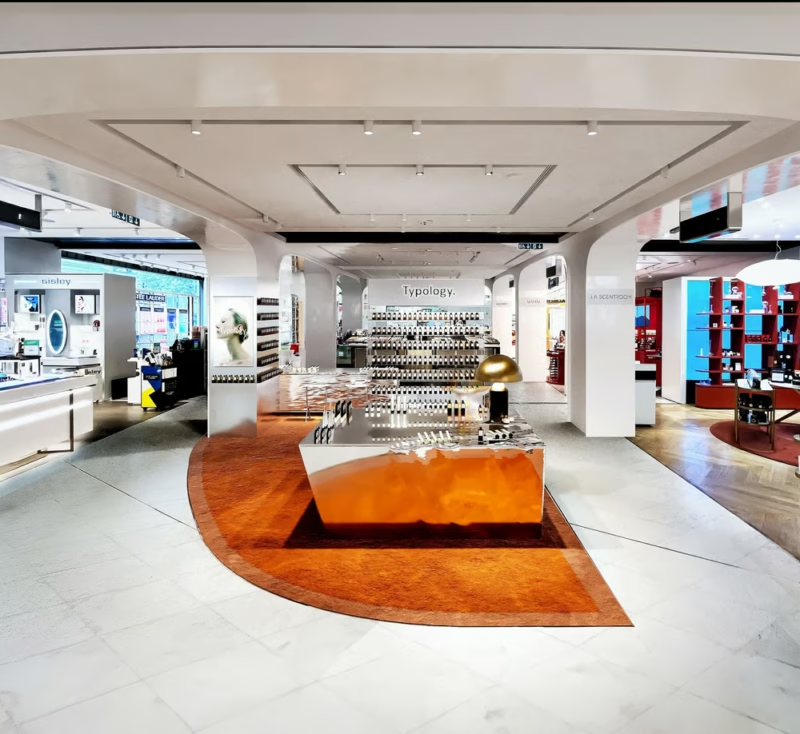
For readers in Paris who want to try products before committing to an online order, Typology has a corner at Printemps Haussmann. For tinted products especially, testing in-store matters — shade matching is easier in natural light than from a screen description, even a good one.
FAQ: Typology Skincare Review
Typology is a French skincare brand founded in 2019, built around minimal ingredient lists, vegan formulations, and ingredient transparency. All products are fragrance-free and priced between €15 and €35. For sensitive, dry, or hormonally reactive skin specifically, the formulations are well-suited — the brand’s approach of short ingredient lists reduces the variables that cause reactions. After three years and fourteen orders, the products I use daily have not changed significantly, which is the most reliable indicator of whether a skincare brand is actually working.
Typology is a French brand, founded and headquartered in Paris. The brand’s formulations are developed in France. Products are available online at typology.com and ship internationally, with a physical presence at Printemps Haussmann in Paris for in-person testing.
The Typology online diagnostic asks a series of questions about your skin type, main concerns (dryness, sensitivity, fine lines, pigmentation, etc.), current routine, and lifestyle. Based on the answers, it recommends a sequenced routine with specific products and the order in which to apply them. The diagnostic is free and available on the brand’s website. It’s useful as a starting point for building a routine, particularly if you’re not sure which active ingredients are relevant for your specific concerns.
All Typology products are formulated without added fragrance, which is one of the brand’s consistent positioning points. This makes the range well-suited for sensitive skin, psoriasis-prone skin, and pregnancy — contexts where fragrance is the first thing to eliminate. The absence of fragrance is noted on each product page.
La Roche-Posay and Avène are pharmacy-channel brands built around dermatological validation and specific skin conditions — their formulations are tested in clinical contexts and often recommended by dermatologists for conditions like eczema, rosacea, and acne. Typology is positioned around clean beauty and ingredient minimalism, with vegan formulations and full ingredient transparency. The price points are comparable across all three brands. For building a complete daily routine from a single starting point, Typology’s diagnostic approach is more practical than navigating individual product recommendations from multiple pharmacy brands. For treating a specific diagnosed skin condition, pharmacy brands with dermatological backing may be the more direct route.
All Typology products are fragrance-free, which addresses one of the primary concerns for skincare during pregnancy. The brand’s formulations avoid common pregnancy-restricted ingredients. During my third pregnancy I used the Gel-en-Huile Vergetures P92 (stretch mark gel-oil) specifically because of the fragrance-free formulation — it was comfortable and hydrating on reactive skin. As with any skincare during pregnancy, checking the ingredient list against current guidance is advisable. The full ingredient lists are available on each product page at typology.com.
Final Thoughts
The Typology products I started with in 2022 are still in my current routine — the L42 cream, the D12 cleansing oil, the L14 milk cleanser. What changed over that time is that I added the C30 bi-phase serum for the psoriasis-prone skin, the eye cream, and the C92 anti-scales cream. The diagnostic got the foundation right, I just added a few more specific products in time.
If you have sensitive or dry skin and you’re looking for a complete routine rather than individual products, the diagnostic is worth starting with. The French pharmacy products guide covers the broader category of what’s worth buying in France — Typology sits alongside rather than instead of the pharmacy brands I’ve been using for years.
For your next Paris trip
Shop Saint-Germain Like a Local
30+ hand-picked boutiques, an interactive map, and 10 years of Left Bank insider knowledge — so you can skip the tourist traps and spend your time actually discovering. $17, instant download.
Get the Guide


