The Best French Perfume Brands You’ll Fall in Love With
After fourteen years in Saint-Germain-des-Prés, here’s what surprised me most about French perfume brands: the gap between what tourists buy and what French women actually wear is enormous, and it has almost nothing to do with price. A friend’s grandmother keeps a bottle of Mitsouko on her shelf — not as a relic, but because she still wears it. And the boutique five minutes from my apartment, the one where locals actually go to choose a new signature scent, is one most visitors never find. This guide covers french perfume brands across three tiers: the legacy houses everyone knows, the modern niche addresses where my friends actually shop, and the handful of haute parfumerie maisons that are worth knowing about even if most people will never own a bottle. The goal is to understand not just which brands exist, but where they actually sit in how French people relate to perfume.
In this guide: legacy houses (the ones in every department store and most airport duty-free), modern niche addresses (where signature scents actually get chosen), haute parfumerie (appointment-only, rarely encountered casually), how perfume concentrations work in daily use, and a FAQ covering the questions I get most often.

This post contains affiliate links. If you purchase through them, I may earn a small commission at no extra cost to you. Merci for your support!
The Legacy French Perfume Brands

These are the houses in every department store and most airport duty-free, the ones a French woman might have inherited a bottle from her mother or grandmother, and the ones tourists gravitate to first because the names are already familiar. That familiarity is not a knock. Some of the best perfume in the world is sold at the Galeries Lafayette beauty hall. But it’s worth knowing what you’re actually choosing between.
1. Chanel
Chanel No. 5 revolutionized the perfume industry in 1921, and it’s still the bottle most likely to sit untouched in a drawer for years and then get worn to something that matters: a wedding, a parent’s funeral, a first date with someone serious. It’s rarely anyone’s daily scent, but it’s almost always someone’s “occasion” scent. Coco Mademoiselle is the one actually worn on Tuesdays: fresher, less ceremonial, and far more likely to be the bottle you actually finish.
2. Dior
Miss Dior and Sauvage sit at opposite ends of Dior’s range, one romantic and floral, the other one of the best-selling men’s fragrances in the world. La Collection Privée is where Dior gets more interesting: smaller-batch, more expensive, less likely to be the bottle you already know.
3. Guerlain
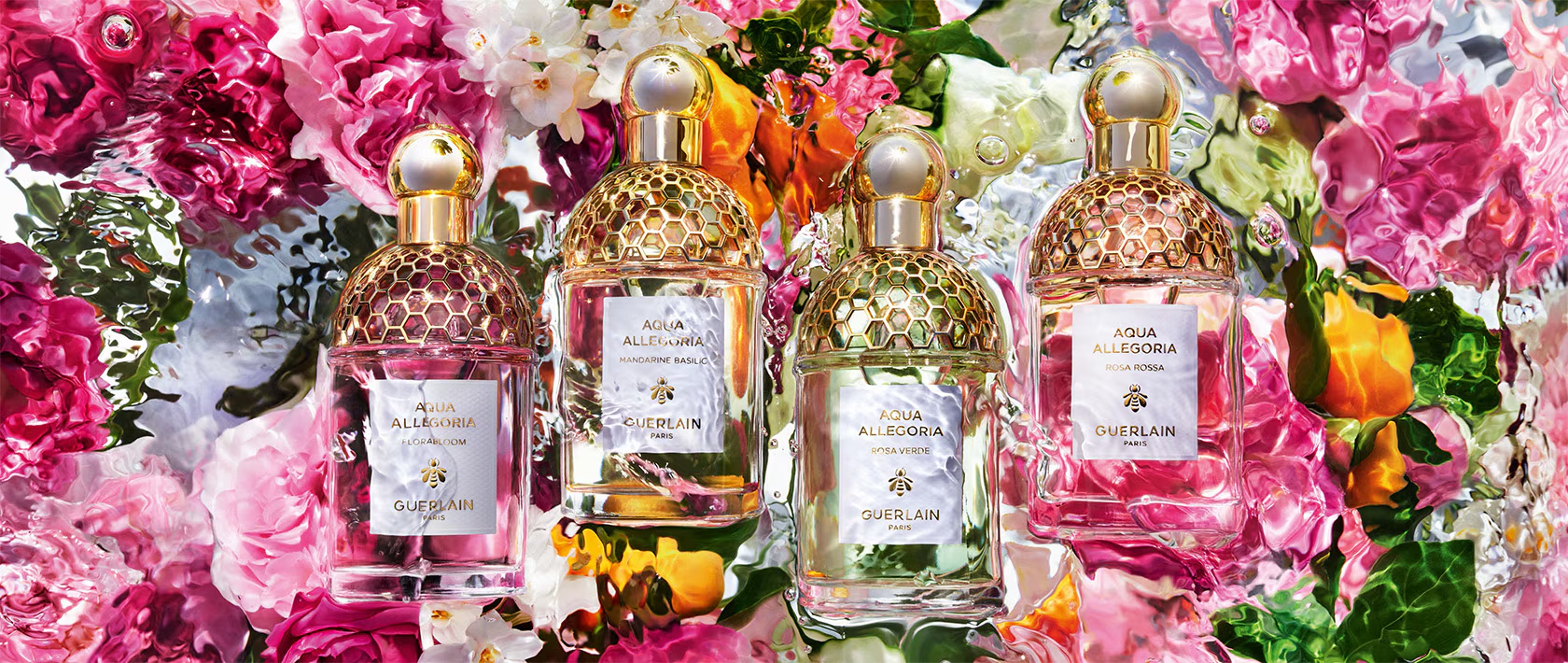
Founded in 1828, Guerlain is the house most associated with the word “vintage” in French perfumery. Shalimar and Mitsouko are both over a century old and both still in production, which is rarer than it sounds. Mon Guerlain is the modern entry point: lighter, more contemporary, and the one most likely to be a twenty-something’s first real perfume rather than something inherited.
4. Hermès

Hermès treats fragrance the way it treats everything else: restraint over statement. Terre d’Hermès is the most recognized; the Hermessence collection is the quieter, more interesting tier most people never get to. If you’ve ever wondered why a Hermès scent feels less loud than a comparable Dior or YSL, the Hermessence line is the answer. It’s perfume designed to be noticed up close, not across a room.
5. Givenchy
L’Interdit was created for Audrey Hepburn and has stayed in continuous rotation since, floral and woody in a way that reads as confident rather than soft. Givenchy doesn’t get talked about as much as Chanel or Dior in this tier, which is partly why it’s worth a second look.
6. Yves Saint Laurent
Opium was a genuine cultural event when it launched, the kind of perfume people had opinions about. Libre is YSL’s modern equivalent: lavender and orange blossom with enough edge that it doesn’t read as generic florals. If Chanel No. 5 is the occasion scent, Libre is closer to what a French woman in her thirties might actually wear on a Tuesday.
7. Lancôme
Lancôme sits at the more accessible end of the legacy tier. La Vie Est Belle is genuinely one of the best-selling perfumes in France, and it’s also one of the easiest to find at a discount, which says something about volume rather than quality. Trésor is the older, quieter sibling.
8. Chloé
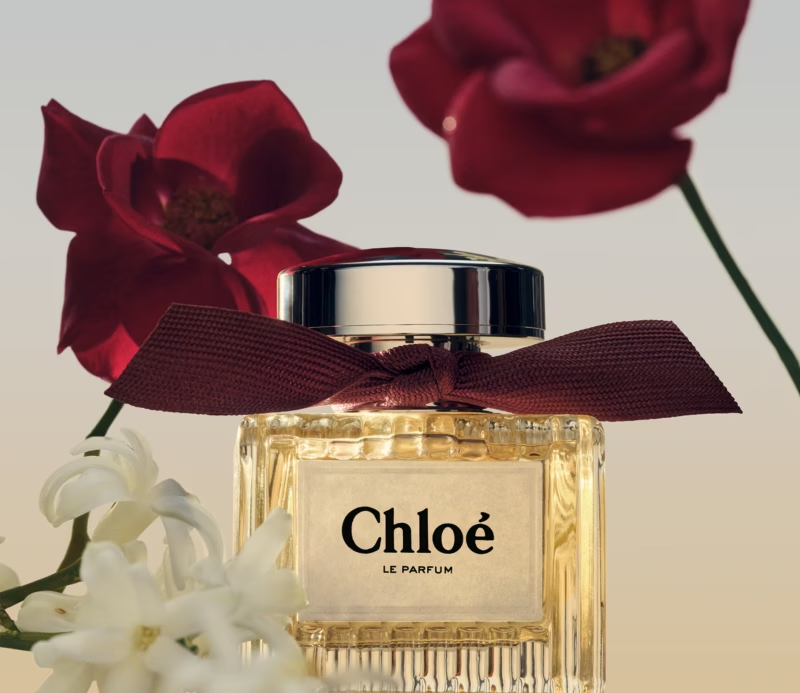
Chloé’s fragrances read as soft and unstructured, in a way that mirrors the brand’s clothing. Nomade and the original Chloé Eau de Parfum are both in this register. The Atelier des Fleurs line is where Chloé gets more specific: smaller batches, single-note focus, sculptural bottles. Worth knowing if the mainline Chloé scents feel too straightforward.
9. Jean-Paul Gaultier
Le Male and Scandal function as much as cultural objects as perfumes, the bottles are as recognizable as the scents themselves. Gaultier’s Divine collection is the less-known, more design-forward tier, with couture-inspired bottles that don’t get the same retail visibility.
10. Rabanne

Lady Million and Phantom are built for projection. These are not subtle perfumes and they’re not trying to be. Rabanne’s fragrance line leans into the brand’s broader identity: confident, slightly futuristic, unmistakable from across a room. For more on the fashion house itself, see Rabanne Paris – The Iconic Fashion Brand.
11. Mugler
Angel, released in 1992, essentially created the gourmand perfume category: sweet, edible-smelling notes that didn’t really exist in mainstream perfumery before it. Alien and Angel Elixir continue that lineage. If you’ve ever smelled a perfume that reminded you of dessert, there’s a good chance Mugler is the reason that category exists at all.
12. Céline

Under Hedi Slimane, Céline’s Haute Parfumerie collection went in the opposite direction from Mugler’s intensity: minimalist, restrained, closer to the brand’s clothing aesthetic than to traditional French perfume expectations. One of the more recently established lines in this tier, and one of the few legacy-house collections that feels genuinely contemporary.
13. Louis Vuitton
Louis Vuitton’s perfume atelier is in Grasse, and Matière Noire and Spell On You both carry the “travel object” framing that runs through the rest of the brand. These are perfumes designed to feel like a luxury purchase as much as a scent choice, and the price point reflects that positioning as much as the formula.
14. Molinard
Molinard is a Grasse house with genuine history: Habanita has been in production since the 1920s. This is the most overlooked name in the legacy tier, partly because it doesn’t have the marketing budget of the fashion-house perfume lines. The perfumery credentials, though, are as old as anything else on this list.
The Modern Niche French Perfume Brands
This is where it gets more interesting, and it’s where my friends in Saint-Germain and the Marais actually go when they’re choosing a signature scent. These boutiques are smaller, the staff actually talk to you about what you’re looking for, and the perfumes tend to be more specific: one idea, executed precisely, rather than a broad commercial profile.
15. Diptyque

Diptyque started as a Saint-Germain candle atelier in the 1960s, and the perfume line still carries that sensibility. Philosykos (fig), Do Son (tuberose), and Eau Capitale are all built around one clear idea rather than a blend of many notes competing for attention. The Diptyque boutique on Boulevard Saint-Germain is one of the few places in the neighborhood where you’ll see someone testing four or five scents on different parts of their arm, genuinely undecided. That’s a decent sign of what the brand attracts. If you love candles, the Best Non-Toxic Candles guide covers the brand’s other side.
16. Frédéric Malle

Éditions de Parfums Frédéric Malle treats perfumers as named authors: every bottle credits its creator, which is unusual in an industry that mostly treats the nose as invisible. Portrait of a Lady and Musc Ravageur are both considered modern classics within the niche world, and both are intense enough that a small amount goes a long way.
17. Maison Francis Kurkdjian

Baccarat Rouge 540 became one of the most-referenced “if you know, you know” perfumes of the last decade, the kind of scent that gets noticed and asked about. Aqua Universalis and À la Rose sit at the lighter end of the same house’s output: less divisive, more wearable daily.
18. L’Artisan Parfumeur

Founded in 1976, L’Artisan Parfumeur started the niche movement before “niche” was a marketing category. Premier Figuier and Mûre et Musc are both nature-inspired in a way that predates the current wave of “botanical” perfume branding by decades.
19. Ex Nihilo
Founded in Paris in 2013, Ex Nihilo is younger and more design-forward than most of this tier. Fleur Narcotique became genuinely popular through social media, which is unusual for a niche house, and the brand’s bespoke and customizable positioning leans into that newer audience.
20. Etat Libre d’Orange

État Libre d’Orange exists to provoke. The names alone (Fat Electrician, Sécrétions Magnifiques) are part of the point. Remarkable People is the most wearable entry point if the rest of the catalogue feels like too much. This is the house for someone who already knows they don’t want anything that smells like everything else in this guide.
If you’re drawn to this kind of house — specific, intentional, not trying to be universally liked — the Sujet Fenaison review covers a recent gifted fragrance in the same spirit.
21. Serge Lutens

Serge Lutens built a reputation on dense, often polarizing compositions. Chergui and Féminité du Bois are both warm, resinous, and not designed to be universally liked. The Palais-Royal boutique (the original Lutens space) is worth visiting even if you don’t buy anything. It’s one of the more theatrical perfume spaces in Paris.
22. Goutal Paris

Founded by Annick Goutal, this house leans into nostalgia more directly than most. Eau d’Hadrien and Petite Chérie both read as deliberately old-fashioned, in a way that’s become its own kind of distinctive. Petite Chérie in particular shows up often as a scent people associate with childhood, even when they didn’t grow up wearing it themselves.
23. Le Labo

Le Labo was founded in Grasse but built its identity in New York, and the hybrid shows. Santal 33 became one of the most-copied fragrance profiles of the last fifteen years, to the point where “smells like Santal 33” is now shorthand in perfume conversations. Another 13 is the other major reference point from this house.
The Haute Parfumerie Maisons
I’ll be honest about this tier: these are houses I know about rather than houses I, or most people I know, actually wear. Haute parfumerie operates by appointment, in discreet salons, often in Grasse or in private Paris addresses. It’s closer to couture than to anything you’d casually pick up. Worth knowing they exist, and worth understanding why they’re priced the way they are, even if they’re aspirational rather than practical for most readers.
24. Henry Jacques

Founded in Grasse in the 1970s, Henry Jacques presents its perfumes in hand-cut crystal flacons that work as much as objects as they do bottles. For a long time this was a house that operated entirely through private clients. It’s only relatively recently opened anything resembling a public-facing boutique.
25. Parfums de Marly

Parfums de Marly takes its name and aesthetic from 18th-century Versailles, and Delina and Layton both lean into that baroque, slightly maximalist register. This is the most accessible of the three haute parfumerie houses here. Layton in particular has built genuine mainstream recognition despite the house’s positioning, which is part of why it’s worth knowing even outside this tier.
26. Maison Dorin

One of France’s oldest perfume houses, Maison Dorin’s history reportedly includes serving Marie Antoinette. Whether or not every detail of that lineage is verifiable, the house’s continued existence as a small, handcrafted operation makes it one of the genuine rarities in this list. Most people will never encounter a bottle of Dorin in person, which is, in its own way, the point.
For the more personal, avant-garde side of French perfumery beyond what’s covered here, 15 Best French Niche Perfume Brands goes deeper into that world. And to see where many of these houses actually have a presence in Paris, The Most Beautiful French Perfume Shops in Paris covers the boutiques themselves, from Palais-Royal to Saint-Germain-des-Prés.
A Brief History of French Perfume

France’s relationship with perfume goes back centuries, reaching a turning point in the 18th century when Grasse became established as the centre of French fragrance production. Its climate and soil made it ideal for growing the jasmine, rose, and other flowers perfumery depends on. At Versailles, perfume was part of court life, not an accessory to it. Marie Antoinette had perfumes made specifically for her, and scenting everything from gloves to letters was widespread among the aristocracy.
That Grasse-centered production model is still the backbone of French perfumery today — many of the houses in this guide, across all three tiers, still source raw materials from the same region. For a deeper look at how this history shaped the industry, The Fascinating History of Perfume covers the full arc.
Understanding French Perfume Concentrations
Perfumes vary in intensity based on their fragrance oil concentration:
- Eau de Cologne – Light, refreshing (3-5% perfume oil)
- Eau de Toilette – Moderate lasting power (5-15% perfume oil)
- Eau de Parfum – Stronger, lasts longer (15-20% perfume oil)
- Parfum (Extrait de Parfum) – The most concentrated (20-30% perfume oil)
In practice, this plays out differently than the percentages might suggest. I’ve noticed that French women are often just as likely to reach for an Eau de Toilette and reapply through the day as they are to rely on an Eau de Parfum to last from morning to evening. The lighter concentration isn’t a compromise; it’s a different relationship with the scent. An EDT applied at 8am and again after lunch behaves differently on the skin than an EDP applied once and left to develop, and which approach someone prefers often says more about their personality than their budget.
If you want to go deeper into fragrance structure, Fragrance by Notes breaks perfumes down by aromatic family to help narrow down a signature scent.
For Men: A Quick Pointer

If you’re shopping for a men’s fragrance specifically, The Best French Perfume for Men covers that territory in depth: Top 10 picks organized by style and occasion, including Dior Sauvage, Bleu de Chanel, and niche houses like Parfums de Marly’s Layton. Several of the houses in this guide (Guerlain, Jean-Paul Gaultier, Parfums de Marly) appear there too, with picks specific to men’s fragrance.
Choosing Your Signature French Perfume
Finding the right scent is as much about personality as ingredients. Whether you’re drawn to powdery florals, woody musks, or sun-warmed citrus, a little experimentation goes a long way, and as the concentration section above suggests, how you intend to wear something (reapplied through the day or applied once and left alone) is worth considering alongside the scent family itself. Perfume Layering à la Française covers how to build a fragrance wardrobe the way French women tend to: multiple scents for different contexts, rather than one signature for everything.
A signature scent is also, in a small way, part of how French women think about a considered wardrobe more broadly. The same logic that applies to building a capsule wardrobe of pieces that work hard and feel deliberate applies to fragrance too: fewer bottles, each one chosen with care, rather than a drawer of half-used impulse buys.
FAQ: French Perfume Brands
Chanel No. 5 is the most internationally recognized French perfume, but it’s rarely anyone’s daily scent. It’s more often an occasion perfume, worn for events that matter rather than a Tuesday. Baccarat Rouge 540 by Maison Francis Kurkdjian has become the most-discussed contemporary scent, popular precisely because it’s distinctive enough to be recognized. Dior Sauvage, meanwhile, is one of the best-selling men’s fragrances in the world and the one most likely to be worn daily rather than saved.
At the haute parfumerie tier, Henry Jacques’ most exclusive creations and Guerlain’s Les Absolus d’Orient collection are both genuinely in the four-figure range for certain bottles and formats. These are priced as much for rarity and presentation (hand-cut crystal, limited production runs) as for the formula itself. For context, most legacy and modern niche perfumes in this guide fall well under 300 euros, even at the higher end. The four-figure pricing is specific to the haute parfumerie tier and isn’t representative of French perfume generally.
French perfume houses combine access to Grasse-grown raw materials (jasmine, rose, and lavender among them) with a level of technical training in perfumery that’s concentrated in France more than almost anywhere else. French perfumers also work with the concept of “sillage,” the scent trail someone leaves behind them, as a deliberate design consideration. Socially, this plays out in small ways: complimenting someone’s perfume is a recognized form of social acknowledgment in France, and a distinctive sillage is part of why some scents (Baccarat Rouge 540, for instance) became popular partly through other people asking what someone was wearing.
Start with fragrance family (floral, woody, citrus, or oriental) since this is the broadest predictor of whether you’ll like something before you even get to specifics. From there, think about occasion: a daytime scent for the office behaves differently than something for evening, both in concentration and in how loud it is. Sillage and longevity matter too. If you prefer something subtle that only you and people close to you notice, an Eau de Toilette in a lighter family is the place to start. If you want real presence, look toward the Eau de Parfum or Parfum concentrations in warmer, more concentrated families. Personal style (classic vs. avant-garde) is the final filter, and it’s the one most worth trusting your own instinct on.
Final Thoughts
If I had to point someone toward one perfume from this entire list, knowing nothing else about them, I’d say Diptyque’s Philosykos. It’s not the most famous name here, it’s not the most expensive, and it’s not trying to make a statement. But it’s the one I’ve watched the widest range of people try and immediately recognize as themselves, which is, in the end, what a signature scent actually is. Everything else in this guide is worth knowing about. This is the one worth starting with.
For your next Paris trip
Shop Saint-Germain Like a Local
30+ hand-picked boutiques, an interactive map, and 10 years of Left Bank insider knowledge — so you can skip the tourist traps and spend your time actually discovering. $17, instant download.
Get the Guide